
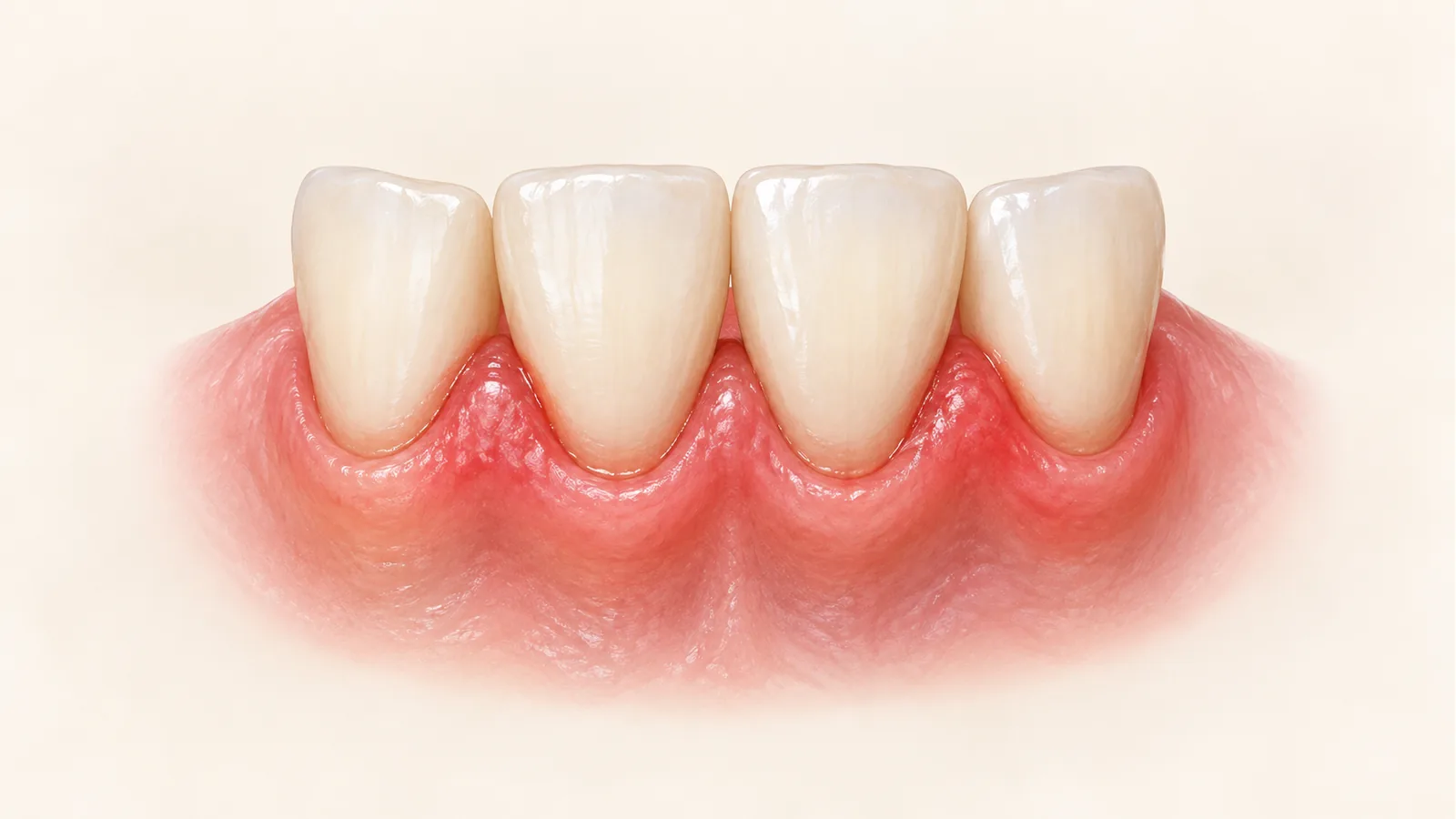
AI-generated image.
Bleeding Gums, Bad Breath or Loose Teeth: When to Seek Care
Bleeding when you brush or floss, persistent bad breath, or a loose adult tooth should be assessed rather than self-diagnosed. These signs can have different causes: only an examination can show whether inflammation is limited to the gum edge or whether the tissues and bone supporting a tooth have been affected. A loose adult tooth needs urgent dental assessment.
Gum symptoms may appear without sharp pain, and gum disease can sometimes have no obvious symptoms. The European Federation of Periodontology describes common warning signs; NHS gum-disease guidance also advises dental review for bleeding, swollen gums, bad breath or loosening teeth. The signs are reasons to arrange an assessment, not a diagnosis. ADA guidance also notes that gum disease may have no warning signs.
Why might my gums bleed when I brush or floss?
Red, swollen or bleeding gums can signal gingivitis, often related to plaque at the gum edge. If a dentist confirms plaque-induced gingivitis before the supporting tissues have been damaged, professional cleaning and effective daily plaque control can allow it to resolve. Bleeding alone cannot show whether that is the cause or whether deeper support is involved. Do not respond by brushing harder or abandoning cleaning between teeth; use a gentle technique and ask a dentist or hygienist to show you what suits your mouth. NHS advice is to brush gently, while the ADA explains gingivitis and gum disease.
What should be checked if bleeding, bad breath or a loose tooth continues?
A dental examination can look at gum redness and swelling, plaque or tartar, bleeding, recession, tooth movement and the spaces around teeth. Depending on the findings, the clinician may measure pockets, assess attachment (the tissues that hold teeth in place), and consider X-rays to assess bone support. Not every person needs every test. Periodontitis involves loss of tooth-supporting attachment and bone; symptoms by themselves cannot confirm it. The EFP stage I–III guideline describes these combined assessment findings.
Bad breath has several possible causes, including problems with teeth or gums, dry mouth, food and some health conditions. It does not by itself prove gum disease. If it persists, mention it at an assessment instead of relying only on mouthwash to mask it. NHS information on bad breath lists common causes and when to seek dental advice.
What do deep gum pockets mean?
A periodontal pocket is a measured space between a tooth and the surrounding gum. A deeper reading can be one sign that support has been affected, but pocket depth is interpreted with findings such as attachment level, bleeding and, when indicated, bone changes on an X-ray. One number or a symptom is not enough to determine the diagnosis or treatment. The EFP explains pocket measurement and gum-support assessment.
A routine scale and polish removes deposits from tooth surfaces. If the examination shows pockets that need treatment, below-gum scaling and root planing may be considered; it is not automatically part of every routine cleaning. The ADA describes when scaling and root planing may be used. You can also read about gum-disease assessment and periodontitis care at the clinic.
Can a loose adult tooth caused by gum disease be saved?
It may be possible to keep some teeth with appropriate care, but no one can promise that from a symptom description. If periodontitis is responsible, looseness can reflect damage to the supporting tissues; the remaining support, examination findings and response to care affect what is possible. A dentist needs to assess the individual tooth and explain its options and limits. EFP patient guidance says careful assessment and treatment can usually halt periodontitis progression, but this does not predict whether a specific loose tooth will remain firm or in place. EFP patient guidance notes that a wobbly tooth can be lost if disease goes untreated; that warning is not an individual prognosis.
A loose tooth on its own does not establish the cause, so arrange an assessment rather than waiting for pain. Very sore, swollen gums, a tooth becoming loose or a tooth falling out warrant urgent dental assessment through care available locally. NHS guidance on urgent gum symptoms. The clinic can confirm appointment availability when you call.
Why is periodontal maintenance important?
After active treatment for periodontitis, supportive periodontal care helps monitor the gums and support ongoing plaque control. A visit may include checking gum health, reviewing home cleaning and risk factors, removing plaque professionally, and cleaning selected remaining pockets when findings call for it. Below-gum instrumentation is not needed at every maintenance visit. This is different from a routine cleaning for someone without a periodontitis treatment plan. The EFP stage I–III guideline describes supportive-care components.
The follow-up schedule is individualized to gum condition and risk. Maintenance cannot guarantee that disease will not return; if assessment finds recurrence, the diagnosis and plan are reviewed and renewed active treatment may be needed. The EFP guideline sets out stage-specific care, while the clinic's periodontal-maintenance page explains its follow-up approach.
Arrange a gum assessment in DLF Phase 2
Marwaha Dental Clinic is at J-4/33, DLF Phase II, opposite Sahara Mall, Gurugram – 122002. Clinic hours are Monday to Saturday, 11 AM–7 PM. To ask about an appointment for bleeding gums, persistent bad breath or a loose tooth, call +91-9818379780 or use the clinic's contact page. See DLF Phase 2 directions.