
Getting a Root Canal in Gurugram? What to Expect Before Treatment
Root canal treatment has an unfair reputation. Most patients who arrive at Marwaha Dental Clinic bracing for pain leave surprised — surprised that it felt no worse than a routine filling, and relieved that the throbbing they'd been living with for weeks is finally gone. The fear of root canals is, in most cases, worse than the procedure itself. What's genuinely worse is waiting too long and losing a tooth that could have been saved. This guide explains what root canal treatment involves, how to recognise the signs that you need one, and what patients at our Gurugram clinics can expect from start to finish.
What Is Root Canal Treatment?
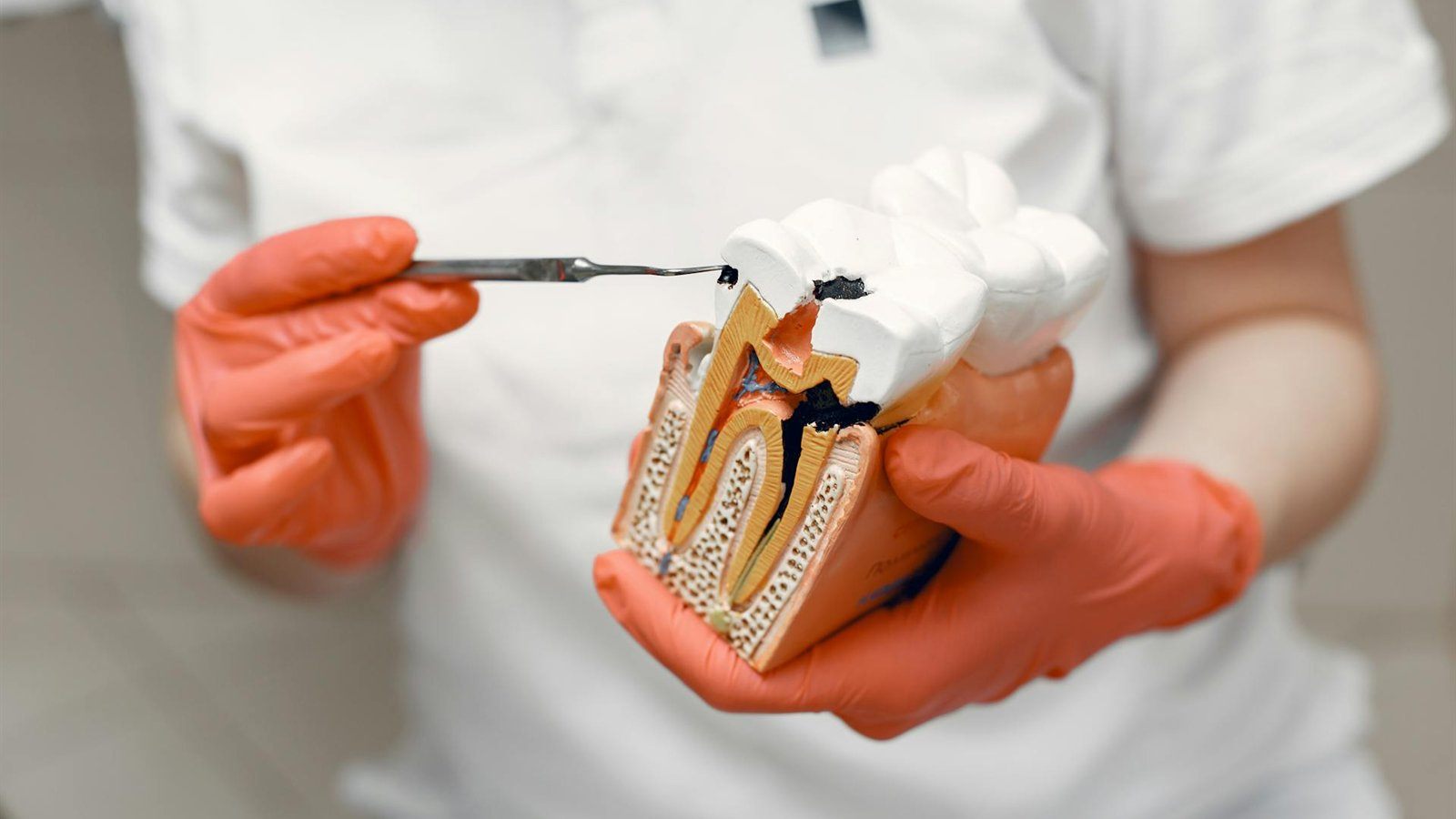
Inside every tooth, beneath the enamel and the dentine, is a soft tissue called the pulp. The pulp contains nerves, blood vessels, and connective tissue — it's what made your tooth sensitive to hot and cold when you were young. When bacteria reach the pulp through deep decay, a crack, or repeated dental trauma, the pulp becomes inflamed and infected. This is what causes the severe, sometimes unbearable toothache associated with an abscess.
Root canal treatment — clinically called endodontic treatment — removes the infected pulp, cleans and shapes the canal inside the root, and seals the tooth so bacteria cannot re-enter. Once the pulp is removed, the tooth no longer has sensation, but it can continue to function normally for decades with a crown placed on top. The tooth is saved. The pain is gone.
What root canal treatment is not: a painful, multi-visit ordeal. At Marwaha Dental Clinic, single-sitting root canal treatment is available for most cases, and the procedure is performed under effective local anaesthesia. Patients may feel pressure, and the team monitors comfort throughout.
Signs You May Need a Root Canal
Not every toothache requires root canal treatment — but certain symptoms are reliable indicators that the pulp is involved. If you recognise any of the following, book an assessment rather than waiting to see if it resolves on its own. It won't.
- Persistent, severe toothache — especially pain that wakes you at night or doesn't subside after the trigger (hot food, cold drink) is removed
- Prolonged sensitivity to temperature — lingering pain after hot or cold contact that lasts more than a few seconds
- Darkening of the tooth — discolouration can indicate the pulp is dying
- Swelling or a pimple on the gum — a gum boil or abscess near a tooth indicates infection has spread to the root tip
- Pain when biting or chewing — especially if it's sharp or lingers
- A tooth that was previously treated but is now painful again — re-infection of a previously root-treated tooth is not uncommon and is treatable
- Deep decay visible on X-ray — your dentist may detect pulp involvement before symptoms become severe
Importantly, some teeth that need root canals may cause little or no noticeable pain — particularly those where the pulp has died slowly. An X-ray remains the only reliable way to assess the internal state of a tooth. Routine dental check-ups at Marwaha Dental Clinic exist precisely to catch these cases before they become emergencies.
Root Canal vs. Extraction: Why Saving the Tooth Is Often Preferred When Possible
When patients hear "root canal," the instinct is sometimes to ask: "Can't you just take it out?" Extraction is faster and, in the short term, cheaper. But it creates a new problem immediately — a gap in your mouth that affects bite, causes neighbouring teeth to shift over time, and often leads to bone loss in the jaw where the root used to be. Replacing an extracted tooth with an implant then costs significantly more than the root canal you were trying to avoid.
Your natural tooth, saved and crowned, will almost always outperform a replacement. It integrates with the bone naturally, doesn't require a healing period, and with reasonable care can be long-lasting. Dr. Divya Marwaha's consistent advice across 25 years of practice: save the tooth whenever it is clinically viable to do so.
| Factor | Root Canal + Crown | Extraction + Implant |
|---|---|---|
| Preserves natural tooth | Yes | No |
| Prevents bone loss | Yes | Partial (implant helps) |
| Number of visits | 1–2 | 4–8 over several months |
| Healing time | Days | 3–6 months |
| Long-term cost | Lower | Significantly higher |
| Outcome if done well | Strong natural-tooth retention | Strong tooth replacement |
The Root Canal Procedure — Step by Step
Knowing exactly what happens during a root canal removes most of the anxiety around it. Here is what a single-sitting root canal treatment at Marwaha Dental Clinic involves:
- Digital X-ray assessment — to map the root canal anatomy and confirm the extent of infection before treatment begins
- Local anaesthesia — the tooth and surrounding area are completely numbed. The injection takes seconds; the numbness lasts the entire procedure
- Rubber dam placement — a small sheet isolates the tooth, keeping it clean and dry throughout treatment
- Access opening — a small opening is made in the top of the tooth to reach the canals
- Pulp removal and canal shaping — fine instruments remove the infected pulp and shape the canals; rotary endodontic files make this step faster and more precise than older techniques
- Canal irrigation — the canals are washed with antimicrobial solutions to eliminate residual bacteria
- Obturation — the cleaned canals are filled and sealed with a biocompatible material called gutta-percha
- Temporary or permanent restoration — in a single-sitting case, this is often completed in the same appointment; a crown is placed (or recommended) at a subsequent visit to protect the tooth long-term
Total chair time for a single-sitting root canal at Marwaha Dental Clinic is typically 60 to 90 minutes depending on the number of canals in the tooth. Front teeth have one or two canals. Molars have three or four — these take slightly longer and may in complex cases require two appointments.
Does a Root Canal Hurt?
This is, understandably, the first question every patient asks. The honest answer: root canal treatment is performed under effective local anaesthesia. Patients may feel pressure - the sensation of instruments working - and comfort is monitored throughout. If at any point you feel discomfort during treatment at Marwaha Dental Clinic, you tell us and we address the anaesthesia immediately. The aim is to minimise discomfort while treating the infection safely.
After the anaesthesia wears off — typically 3 to 4 hours after treatment — mild soreness around the treated tooth is normal and expected. This reflects the fact that inflamed tissue around the root tip needs a day or two to settle. Most patients manage this comfortably with standard over-the-counter pain relief. Significant post-procedure pain is the exception, not the rule.
Laser-assisted root canal treatment, available at Marwaha Dental Clinic, uses laser energy to disinfect the canals more thoroughly than irrigation alone — and has the added benefit of reducing post-treatment inflammation. Patients who opt for laser-assisted RCT typically report faster recovery.
Single-Sitting Root Canal: Is It Right for You?
Single-sitting root canal treatment — completing the entire procedure in one appointment — is appropriate for the majority of cases. It reduces total treatment time, eliminates the discomfort of multiple anaesthetic injections across visits, and avoids the risk of re-contamination between appointments. Dr. Divya Marwaha assesses each case individually: the number of canals, severity of infection, and root anatomy all factor into whether a single sitting is suitable. Most straightforward cases are.
After Your Root Canal: What to Expect During Recovery
Healing after root canal treatment is often more comfortable than many patients anticipate. Here is what the first 72 hours typically look like:
- Day 1: The anaesthesia wears off over 3–4 hours. Mild soreness around the tooth is normal. Avoid chewing on that side. Soft foods only.
- Day 2: Soreness usually peaks and then begins to ease. Standard pain medication is sufficient for most patients.
- Day 3 onwards: The majority of patients return fully to normal eating and activities. Sensitivity should be noticeably diminishing.
One critical point: a root canal-treated tooth is structurally more brittle than a living tooth because the internal moisture is gone. Until a crown is placed, avoid biting hard food on that side. The crown appointment — typically 1 to 2 weeks after root canal completion — protects the tooth from fracture and restores normal biting function. Skipping the crown is one of the most common reasons a successfully root-treated tooth ultimately fails.
Root Canal Cost in Gurugram: What the Price Difference Actually Reflects
Root canal treatment costs in Gurugram vary considerably depending on the tooth, the clinic, and the technology used. Front teeth (single canal) are less complex than molars (three to four canals). A root canal at a general dentistry chain and one performed by a specialist with 25 years of experience and laser-assisted equipment are not the same procedure — even if the name on the invoice is identical.
At Marwaha Dental Clinic, root canal treatment is performed by Dr. Divya Marwaha — Gold Medalist, Ex-AIIMS, with over 25 years of clinical experience in restorative and cosmetic dentistry. What that experience means practically: accurate diagnosis before treatment, efficient single-sitting completion where appropriate, and a significantly lower risk of the complications — missed canals, incomplete obturation, re-infection — that lead to retreatment or eventual extraction.
A failed root canal that requires retreatment costs more than the original procedure. A tooth lost after a failed root canal then requires an implant, which costs several times more still. The economics strongly favour doing it right the first time, with the right specialist.
Frequently Asked Questions — Root Canal Treatment in Gurugram
How do I know if I need a root canal or just a filling?
If the decay has reached the pulp — confirmed by X-ray and clinical symptoms such as spontaneous pain, prolonged sensitivity to temperature, or a gum abscess — a root canal is necessary. A filling treats decay that hasn't reached the pulp. Only a clinical assessment can reliably distinguish the two. Book an appointment at Marwaha Dental Clinic for a diagnosis.
Is root canal treatment painful?
The procedure itself is performed under effective local anaesthesia; patients may feel pressure, and comfort is monitored throughout. Mild soreness for 24–48 hours after treatment is normal and managed easily with standard medication. The pain patients fear is almost always the infection that made the root canal necessary; the treatment relieves it.
Can a root canal be done in one sitting?
Yes — for the majority of cases, single-sitting root canal treatment is suitable and is the preferred approach at Marwaha Dental Clinic. Complex molars or cases with severe infection may occasionally require two appointments. Dr. Divya Marwaha assesses each case individually before treatment begins.
Do I need a crown after a root canal?
For molars and premolars — teeth that bear the load of chewing — a crown after root canal treatment is strongly recommended. Without a crown, a root canal-treated tooth is at significant risk of fracture. Front teeth may sometimes be restored with a tooth-coloured filling if the remaining tooth structure is adequate. Your dentist will advise the right restoration for your specific tooth.
Which dentist can I consult for root canal treatment in Gurugram?
Dr. Divya Marwaha at Marwaha Dental Clinic — Gold Medalist, Ex-AIIMS, 25+ years of experience in restorative and cosmetic dentistry. She practices at DLF Phase 2 (opposite Sahara Mall) and Sector 39 (near Medanta Hospital), Gurugram. Patients can review current feedback directly on Google and Practo.
What happens if I delay or avoid root canal treatment?
A dental infection does not resolve on its own. Without treatment, the infection spreads — to the surrounding bone, adjacent teeth, and in severe cases, to other areas of the head and neck. The tooth eventually becomes non-restorable and must be extracted. What could have been a 90-minute appointment becomes a tooth loss, a gap, and a significantly more expensive replacement procedure. Early treatment usually gives the dentist more options.
Book An Appointment
Message the clinic on WhatsApp during clinic hours
Book via WhatsAppTimings: Mon-Sat: 10AM-8PM