
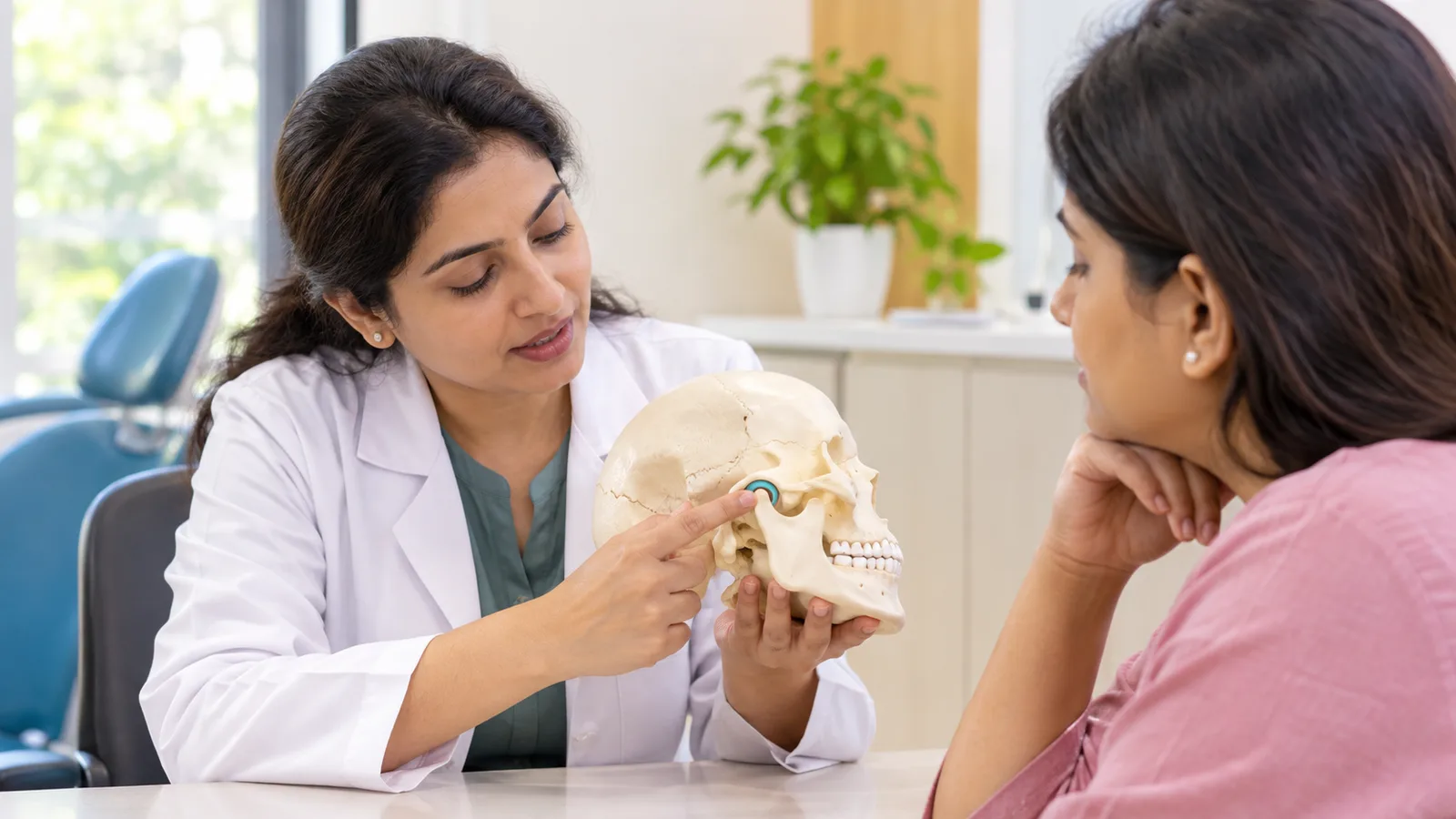
AI-generated image.
TMJ Treatment Options Compared: What Usually Comes First and What Comes Later
There is no single best treatment for TMJ problems. Experts recommend starting with simple, reversible care, such as soft food, heat or cold, gentle jaw exercises and reducing habits like clenching, and many TMJ problems settle on their own. Physiotherapy, behavioural approaches, medicines or a mouth appliance may be added if simple care does not help. Injections, joint procedures and surgery are kept for specific situations. Treatments that permanently change the bite are not supported by good evidence. NIDCR: TMD · NHS: TMD.
Looking for a TMJ specialist in Gurgaon? Consult Dr. Divya Marwaha, TMJ dentist at Marwaha Dental Clinic, DLF Phase 2. In 25 years of practice she has treated 3,000+ patients with jaw pain and TMJ problems. She checks your symptoms, jaw movement and teeth before discussing care, with simple, reversible options generally preferred first. See TMJ treatment in Gurgaon or call +91-9818379780.
TMJ treatments at a glance
| Option | What it involves | What the evidence says | Can it be undone? |
|---|---|---|---|
| Self-care | Soft food, heat or cold, gentle jaw exercises, avoiding gum chewing, nail biting and clenching | Recommended first step; many TMJ problems settle on their own | Yes |
| Over-the-counter painkillers | For example, anti-inflammatory painkillers such as ibuprofen, if suitable for you; check with a pharmacist or doctor first | Used for pain relief alongside self-care | Yes |
| Prescription medicines | Some medicines used for anxiety, depression or seizures, and opioids | Limited evidence on which work best; some can cause dependence or serious side effects | Not permanent; follow your prescriber's advice on stopping |
| Physiotherapy | Guided exercises and manual therapy to the muscles around the joint | Manual therapy may improve movement and relieve pain | Yes |
| Behavioural approaches | Cognitive behavioural therapy, biofeedback, relaxation | Can help manage TMD; teach coping skills and awareness of jaw tension | Yes |
| Splint or night guard | A removable appliance worn in the mouth | Protects teeth; evidence that it relieves TMJ pain is limited | Yes, if it does not change the bite |
| Bite-changing treatment | Crowns, grinding down teeth or orthodontics to change the bite | Insufficient evidence for TMJ problems; may make some cases worse | No |
| Botulinum toxin injections | Injections into the chewing muscles | Works by relaxing muscles; mixed results; not approved for TMJ disorders in the US | Ask how long any effect may last |
| Arthrocentesis | Flushing fluid through the joint | May help pain and opening in some people with a displaced disc; results inconsistent | Needle procedure into the joint |
| Arthroscopy | A small camera inserted into the joint, sometimes with treatment inside it | Works moderately well for pain and function | Surgical procedure |
| Open surgery or joint replacement | Permanent changes to, or replacement of, the joint | No long-term safety studies for open surgery; kept for severe or specific cases | No |
Source for the table: NIDCR: TMD.
Step 1: simple care you can start at home
The NHS suggests eating soft food such as pasta, omelettes and soup; holding an ice pack or a heat pack wrapped in a tea towel to the jaw, whichever feels better; and avoiding chewing gum or pen tops, biting your nails, clenching your teeth and yawning too wide. NHS: TMD. NIDCR adds gentle jaw stretching and strengthening exercises, over-the-counter painkillers, and learning about your type of TMD, relaxation, and staying involved in activities that matter to you. NIDCR: TMD. Ask a pharmacist or doctor whether a painkiller is suitable for you, especially if you have other health conditions or take other medicines.
The NHS describes TMD as not usually serious and says it generally gets better on its own. NHS: TMD. That is why simple care comes first.
Step 2: when simple care is not enough
If simple measures do not help, a GP may suggest stronger painkillers, relaxation techniques or ways to improve sleep, or suggest seeing a dentist, physiotherapist or psychologist. NHS: TMD. NIDCR describes these further options:
- Physiotherapy. A physiotherapist works on movement and function; manual therapy, where the therapist stretches the soft tissues and muscles around the joint, may improve function and relieve pain.
- Behavioural approaches. Cognitive behavioural therapy helps change unhelpful thought patterns and teaches coping skills. Biofeedback uses sensors to show muscle tension so you can learn to relax the jaw.
- Prescription medicines. Some medicines used for anxiety, depression or seizures, and opioids, are sometimes prescribed for TMD pain. There is limited evidence on which work best, and some can lead to addiction or serious side effects, so make sure you understand how and for how long to take them.
- A splint or night guard. These appliances can protect the teeth and may help reverse habits such as clenching, but evidence that they relieve TMD pain is limited. Make sure it is not designed to permanently change your bite, and stop using it and contact your dentist if it causes pain.
Sources: NIDCR: TMD. For more on appliances, read night guards for grinding versus jaw pain.
NIDCR also notes limited evidence for acupuncture, and some small, short-term studies suggesting that TENS (mild electrical nerve stimulation) may relieve pain and improve mouth opening. NIDCR: TMD.
Step 3: injections, joint procedures and surgery
If treatment at home and from your GP does not help, the NHS says you may be referred to a specialist in joint problems to discuss options such as painkilling injections or surgery. NHS: TMD. NIDCR describes the main options:
- Botulinum toxin injections: approved in the US for other conditions but not for TMJ disorders; study results are mixed and it is unclear whether it relieves TMD symptoms.
- Arthrocentesis: fluid is flushed through the joint to remove adhesions and inflammatory substances. It may help pain and mouth opening in people with a displaced disc, but results are inconsistent.
- Arthroscopy: a small camera is placed in the joint to look inside, and the surgeon may remove adhesions or reposition the disc. It works moderately well for pain and function.
- Open surgery and joint replacement: these make permanent changes. There are no long-term studies on the safety of open TMD surgery, and surgery should be considered only for joint damage that cannot be repaired or severe symptoms that continue despite other treatments.
Source: NIDCR: TMD. Before agreeing to any procedure, ask why it is suggested, what the alternatives are, how it will help and what the risks are, and consider a second opinion. Our article on which doctor to see for TMJ or jaw pain explains who does what.
What to avoid: changing the bite first
Crowns, grinding down teeth or orthodontic treatment to change the bite are sometimes offered for jaw pain. NIDCR says there is insufficient evidence that these occlusal treatments work for TMD, and in some cases they may make the problem worse. Because they cannot be undone, they should not be the starting point for TMJ pain. NIDCR: TMD.
So which treatment is right for you?
It depends on what is causing the pain: the chewing muscles, the joint itself, the teeth or something else. That is why an assessment matters before treatment is chosen. If jaw pain comes with an inability to eat or drink, frequent severe headaches, or vision problems, get urgent medical help. NHS: TMD. Our guide to jaw pain, clicking and headaches lists what to note before an appointment.
Consult Dr. Divya Marwaha, TMJ Dentist in Gurgaon
At Marwaha Dental Clinic, Dr. Divya Marwaha, the clinic's founder and a dental surgeon with 25+ years of clinical practice, assesses jaw pain by looking at your symptoms, jaw movement and dental health before discussing care. Read more about TMJ treatment in Gurgaon and the teeth-grinding assessment.
To book, call +91-9818379780 or message the clinic on WhatsApp. The clinic is at J-4/33, DLF Phase II, opposite Sahara Mall, Gurugram – 122002, open Monday to Saturday, 11 AM to 7 PM. See the DLF Phase 2 clinic page or the contact page.
Frequently Asked Questions
There is no single best treatment. Experts recommend starting with simple, reversible care such as soft food, heat or cold, gentle jaw exercises and reducing habits like clenching, and adding physiotherapy, behavioural approaches, medicines or an appliance only if needed. The right choice depends on whether the pain comes from the muscles, the joint or something else. See NIDCR: TMD.
A splint or night guard can protect the teeth and may help reverse habits such as clenching, but evidence that it relieves TMD pain is limited. It should not be designed to permanently change your bite, and you should stop wearing it and contact your dentist if it causes pain. See NIDCR: TMD.
Usually, yes. The NHS says TMD is not usually serious and generally gets better on its own, and NIDCR recommends simple treatments first. Surgery is considered only for joint damage that cannot be repaired or severe symptoms that continue despite other treatments. See NHS: TMD · NIDCR: TMD.
Botulinum toxin is sometimes injected into the chewing muscles, but in the US it is approved for other conditions, not for TMJ disorders. Study results are mixed and it is unclear whether it relieves TMD symptoms, so ask about the expected benefit, risks and alternatives first. See NIDCR: TMD.
Arthrocentesis flushes fluid through the jaw joint to remove adhesions and inflammatory substances. It may help pain and mouth opening in some people with a displaced disc, but results are inconsistent, so it is usually considered after simpler care. See NIDCR: TMD.
There is no fixed time. Many TMJ problems settle with simple care, and a dentist or doctor can review your symptoms and suggest other options if they do not improve. Get help sooner if the pain is getting worse, and urgently if you cannot eat or drink or have vision problems. See NIDCR: TMD · NHS: TMD.